
Blog
-
Posted: October 09, 2026
 Read more »
The average full kitchen remodel in America now runs from the high teens into the 40,000-dollar range — numbers that stop most families before they start. But averages hide the truth: a beautiful, durable kitchen transformation is absolutely achievable on a fraction of that budget, if you know where costs actually hide and which savings are smart versus which ones you will curse in two years. Here are twelve proven strategies, ranked roughly by impact, from a company that helps budget remodelers every day.
1. Attack the Biggest Line Item First: Cabinets
Cabinets consume 30 to 40 percent of a typical remodel budget, which makes them the highest-leverage saving available. Buying ready-to-assemble (RTA) cabinets online instead of assembled showroom cabinetry saves 40 to 60 percent on identical materials — solid wood doors, plywood boxes, soft-close hardware. On a kitchen where a showroom quotes 12,000 dollars of
-
Posted: October 02, 2026
Read more »
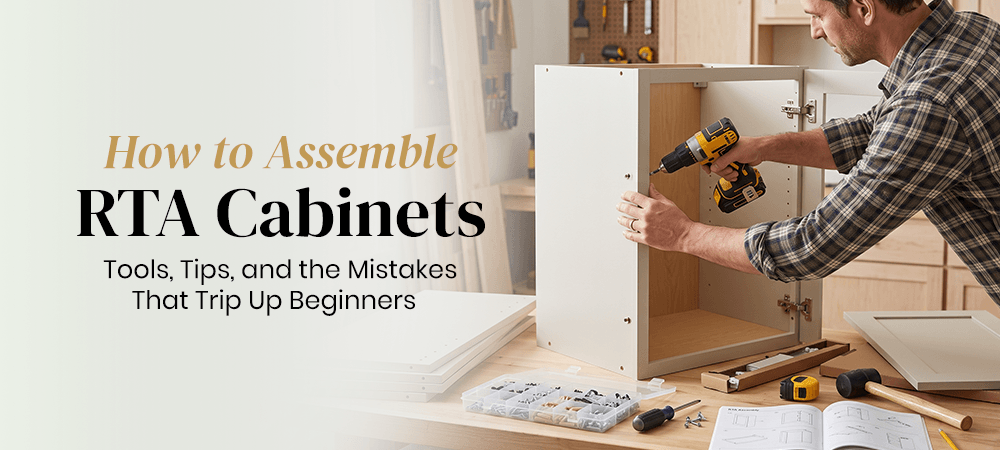
The number one hesitation people have about ready-to-assemble cabinets is not price and not quality — it is the quiet worry that assembly will turn into a lost weekend of confusing parts and stripped screws. Let us put that fear to rest with real numbers: a typical RTA cabinet assembles in 15 to 30 minutes, a full kitchen is a comfortable weekend project for one or two people, and the skills required peak at "can use a screwdriver and follow a video." Here is the complete playbook, from the toolbox to the seven mistakes that cause virtually all RTA problems.
The Tools You Actually Need
No workshop required. Gather a #2 Phillips screwdriver (a drill with a clutch is faster — more on that below), a rubber mallet, a tape measure, a level, wood glue, and a flat, clean workspace such as a garage floor with a moving blanket or the empty kitchen itself. Optional but wonderful: a corner clamp to hold panels square, and
-
Posted: September 25, 2026
Read more »
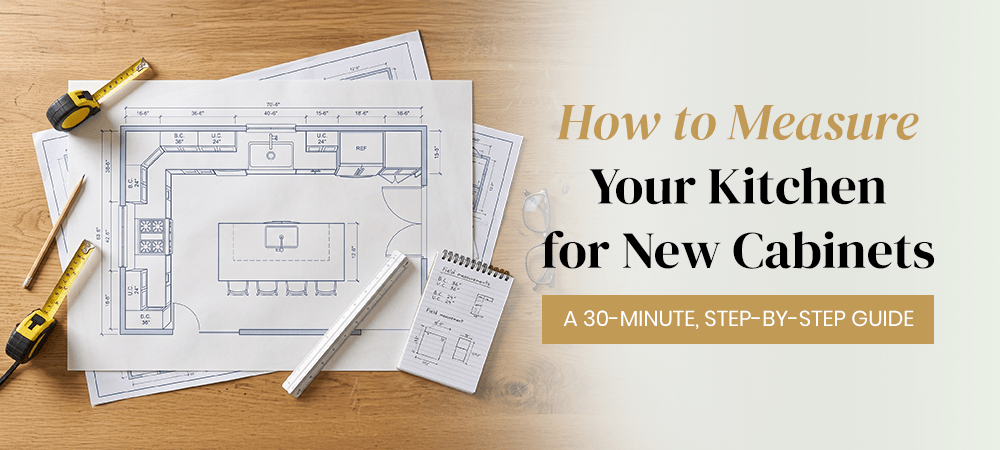
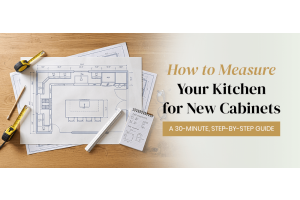
Every great kitchen begins with a tape measure. Accurate measurements are the difference between a remodel that clicks together like a puzzle and one plagued by awkward gaps, blocked drawers, and expensive reorders. The good news: measuring a kitchen properly takes about 30 minutes, requires no special skill, and this guide walks you through every step — including the clearances and quirks that trip up first-timers. Do it once, do it right, and a free design service can turn your numbers into a complete 3D kitchen plan.
What You Need
A 25-foot tape measure, a pencil, graph paper (or any paper), a level if you have one, and a phone camera. That is the whole toolkit. Measure in inches, to the nearest one-eighth inch, and write every number down immediately — the measurement you were sure you would remember is always the one you forget.
Step 1: Sketch the Room First
Before measuring any
-
Posted: September 18, 2026
Read more »
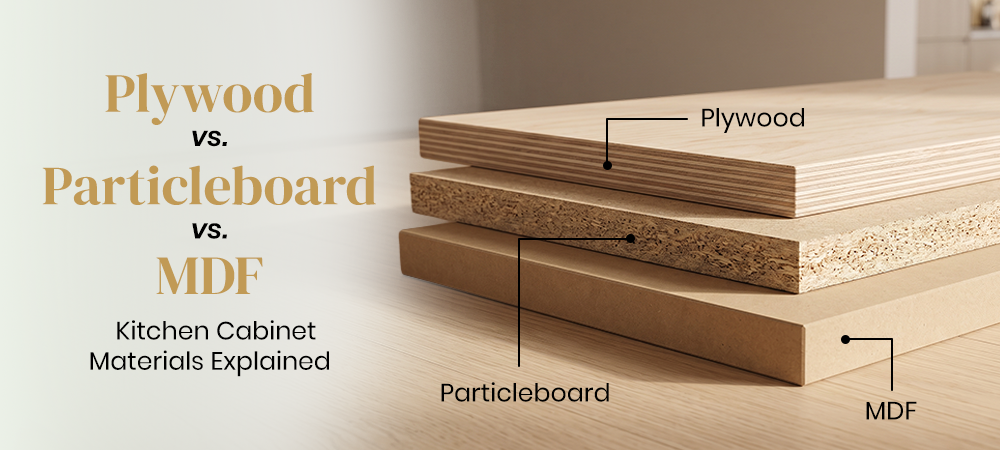
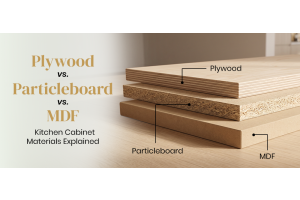
Two kitchens can look identical on installation day and age completely differently. Ten years in, one still closes softly and holds a full load of dishes; the other has sagging shelves, swollen sink bases, and hinges pulling out of crumbling holes. The difference was never visible in the showroom photo — it was in the materials. If you are comparing kitchen cabinets, this guide explains exactly what plywood, particleboard, MDF, and solid wood each do well, where each fails, and what a smart buyer should actually order in 2026.
The Four Materials in Every Cabinet Conversation
Solid wood
Real lumber — maple, birch, oak. This is what quality face frames, door frames, and dovetail drawer boxes are made of. It holds screws tenaciously, survives impacts, and can be sanded and refinished. Its one weakness: wide solid panels expand and contract with humidity, which is why even premium doors pair a s
-
Posted: September 11, 2026
Read more »
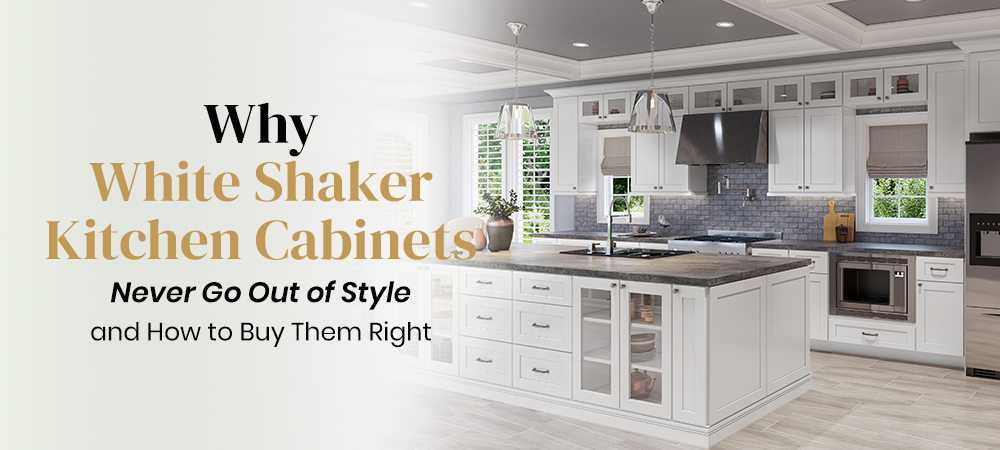
Search data does not lie: "white shaker kitchen cabinets" is among the most-searched cabinet phrases in America year after year, and shaker doors account for more than half of all kitchen cabinet installations. Trends rise and fall — glazed cherry, espresso, gray everything — but the white shaker kitchen keeps outselling them all.
That is not an accident. Here is why this 200-year-old design still wins, what it should cost you in 2026, and how to buy it without overpaying.
A Quick History: From Shaker Workshops to Your Kitchen
The shaker door takes its name from the Shakers, the 18th-century religious community whose furniture philosophy was radical simplicity: build things plainly, honestly, and well. The five-piece door they perfected — a flat recessed center panel inside a simple square frame — carries no ornament to date it, no curve to go out of fashion. It looked right in 1820, it looked