
Are RTA Cabinets Good Quality? The Honest Truth From People Who Sell Them
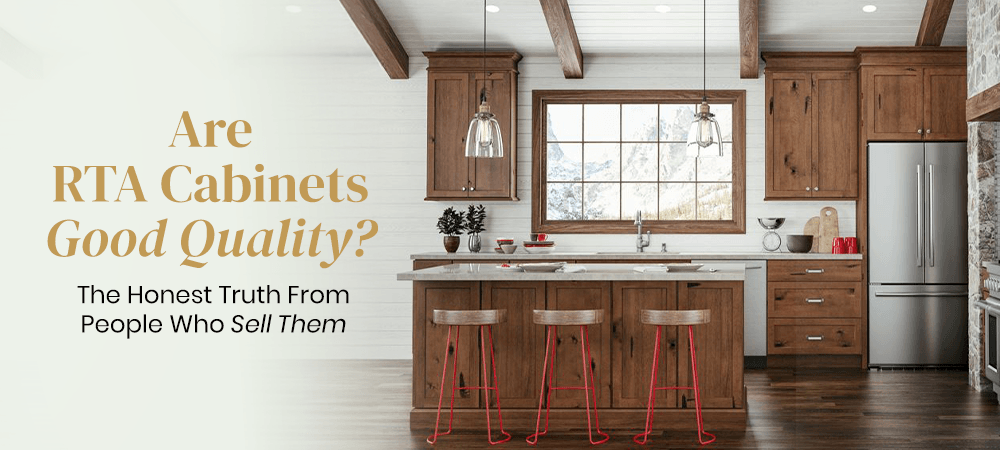
Type "RTA cabinets" into Google and the autocomplete tells you exactly what shoppers are worried about: "are RTA cabinets good quality," "RTA cabinets pros and cons," "do RTA cabinets last." Fair questions. When a complete kitchen costs less than two custom cabinets, something has to explain the difference — and buyers want to know that something is not quality.
Here is the honest answer, including the parts most cabinet websites will not tell you.
The Short Answer
Good RTA cabinets are genuinely good — solid hardwood face frames and doors, plywood box options, dovetail drawers, soft-close hardware, and finishes applied in modern factories. Bad RTA cabinets are genuinely bad — thin particleboard, stapled drawers, peeling thermofoil. The letters R-T-A tell you how a cabinet ships, not how it is built. Quality lives in the spec sheet.
The price difference against custom and showroom cabinets comes from logistics, not materials: flat-pack shipping costs a fraction of freighting assembled boxes, you provide the assembly labor, and online sellers skip showroom overhead and dealer markups. Same wood. Less overhead.
What Quality RTA Construction Looks Like
When you evaluate any RTA cabinet line, check these seven things:
- Face frames and door frames: solid hardwood, not MDF wrapped in foil. Solid wood takes screws, survives bumps, and can be touched up.
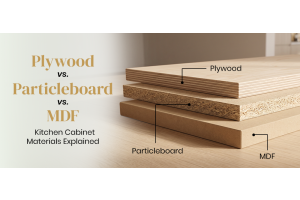
- Box construction: furniture-grade plywood resists moisture and holds fasteners far better than low-density particleboard. Many of our lines offer all-plywood construction standard.
- Drawer boxes: dovetail joints are the industry gold standard. Stapled butt joints are the first thing to fail in a cheap cabinet.
- Drawer glides: full-extension, soft-close undermount glides rated for 75-plus pounds. You should be able to open a drawer fully and see everything inside.
- Hinges: six-way adjustable soft-close hinges keep doors aligned for decades.
- Shelves: three-quarter-inch thick, adjustable, with a sealed finish. Half-inch shelves sag under dishes within a year.
- Finish: multi-step catalyzed finishes resist yellowing, moisture, and household cleaners far better than single-coat sprays.
Every collection at RTA Cabinets Express — from Heritage White Shaker to Onyx Shaker to Saddlewood — is built to these standards. That is not marketing; it is why we can offer price matching against any competitor.
Certifications: The Shortcut That Does the Homework for You
Two acronyms separate serious cabinet manufacturers from the rest. KCMA (Kitchen Cabinet Manufacturers Association) certification means the cabinet passed independent testing: doors slammed 25,000 times, shelves loaded for weeks, finishes attacked with vinegar, lemon, ketchup, coffee, and alcohol. CARB-2 compliance means the composite wood meets California's strict formaldehyde emission limits — important for your indoor air quality. RTA Cabinets Express carries both, along with BKBA affiliation. If an online cabinet seller shows neither certification, ask why.
The Real Pros and Cons
Pros
- Price: typically 40 to 60 percent below comparable assembled showroom cabinets once shipping and labor are counted.
- Speed: ships in days; custom takes months.
- Consistency: factory-machined parts fit the same way every time — no "the shop guy was having a bad day" variability.
- Availability: replacement doors and parts are stocked, not rebuilt from scratch.
Cons
- Assembly time: budget 15 to 30 minutes per cabinet. A full kitchen is a solid weekend project. (Our assembly videos cut that time down significantly — and the pre-assembled option removes it entirely.)
- Standard sizing: cabinets come in 3-inch increments, so odd spaces need fillers and panels. A good free design service handles this invisibly.
- Variable market: the RTA market has both excellent and terrible products, which is exactly why the spec checklist above matters.
How to Vet an RTA Cabinet Seller in 10 Minutes
First, order a door sample — any serious seller offers them, and holding the actual wood tells you more than fifty product photos. Second, watch one of their assembly videos: clear videos mean the company actually supports DIYers, and you will see the box construction on camera. Third, call the phone number and ask a hard question about plywood grades or hinge brands; you learn a lot from whether a human answers and whether they know their product. Fourth, check the warranty and freight-damage policy in writing. RTA Cabinets Express publishes all of this, answers the phone Monday through Friday 8 to 5, and speaks English and Spanish — because confident companies make themselves easy to interrogate.
Do RTA Cabinets Last?
A properly assembled, properly installed RTA kitchen with solid wood doors and plywood boxes lasts 20 to 30 years — the same service life as comparable custom work, because it is made of the same materials. The finish, not the structure, usually determines when a kitchen looks dated, and that is a style decision, not a durability failure. Timeless door styles like shaker age gracefully, which is one more reason they dominate American kitchens.
The Bottom Line
Are RTA cabinets good quality? The good ones, absolutely — and the difference between good and bad is printed on the spec sheet, verified by KCMA testing, and confirmed by a 15-dollar sample door in your hands. Order samples from RTA Cabinets Express, get a free 3D kitchen design, and judge for yourself. With the current 25-percent-off KITCHEN25 promotion, the quality-per-dollar math has never been more lopsided in your favor. Call 866-595-4727 with any spec question — we enjoy those calls.
What About Assembly Quality? You Are Part of the Equation
One honest caveat: an RTA kitchen is only as good as its assembly and installation. The most common quality complaints about RTA cabinets trace back to rushed assembly — cam locks left half-turned, backs not squared before tightening, or cabinets hung on drywall anchors instead of studs. None of that is a materials problem, and all of it is preventable. Work on a flat surface, square each box before final tightening, always screw into studs, and level the base run before setting a single wall cabinet. Follow the videos, take your time on the first two cabinets, and the rest of the kitchen goes twice as fast.
A Quick Word on Price Anchoring
Showrooms are very good at making 30,000-dollar kitchens feel normal, which makes an 8,000-dollar quote feel suspiciously cheap and a 3,000-dollar RTA kitchen feel impossible. Reset your anchor with facts: the materials in a kitchen — wood, plywood, hinges, glides, finish — simply do not cost what showrooms charge. When you remove showroom rent, commissioned salespeople, assembly labor, and bulky freight, the honest price of a quality kitchen is exactly what the RTA market charges for it. You are not getting a suspicious discount; you were previously paying a very large, very quiet markup.
Frequently Asked Questions
What is the biggest quality difference between cheap and good RTA cabinets?
Drawer construction and box material. Dovetail solid wood drawers on soft-close undermount glides plus plywood boxes signal a quality line; stapled drawers and unbranded particleboard signal a short life.
Do contractors use RTA cabinets?
Constantly — flippers, remodelers, and property managers are among the heaviest RTA buyers because the math works at volume. RTA Cabinets Express runs a professional discount program for exactly this audience.
Is there a warranty on RTA cabinets?
Reputable sellers warranty RTA cabinets just like assembled ones. Check the terms before buying — and treat a missing or vague warranty page as the red flag it is.